

Table of Contents
Dogs are pack animals, and they love to please their leader. To become the leader of your pack (family), you must first learn how to ask what you need from your dog. This begins with understanding basic commands and how to use all the other skills available in this Playbook effectively.
Teach Them To Love Learning:
Keep in mind that teaching your dog to understand human language (commands) is not natural to them. It will serve your relationship in many ways to have your dog enjoy what you are teaching them and to follow some of these tips. For commands to be reliable, you must practice frequently. Incorporating moments of random rewards for simple exercises. This allows them to practice following our lead in more stressful situations.
Keep In Mind:
- Always start first in very low distracting areas, and slowly bring up the level of distractions before assuming it will work. Start in a place where they can process what they are learning.
- If you are taking time to train your dog, keep it short and sweet. The quality of the sessions is far more important than how long you train. If you or your dog get frustrated, take a break. Come back to it at another time when you feel ready and optimistic about trying again.
- Your dog needs 100’s of repetitions of successful, reward-based repetitions in the first stages of learning.
- Just because you trained your dog to do something doesn’t mean that it will automatically do it in another place, keep in mind that different stimuli (sounds, textures, smells) and places will weaken the association. This is why repetition is key!
“Calm State of mind”

If you want a dog that stays calm during distractions, you must train it to stay in a “Calm state of mind” during the foundation of certain behaviors. This will lead to having an “off switch” for when your dog gets too excited, and you need to calm them down without having to correct them.
When training, we want to focus on the level of energy we want through commands, tricks, or requests. For example, “Down” or “Place” can be taught to have a calming effect on the dog, while “Sit,” “Touch,” “Heel,” and “Come” (recall) should make the dog happy and excited to fulfill.
Concentrate on rewarding a “Calm state of Mind” while teaching certain obedience behaviors. Behavior commands will reflect the energy it was when you train them. I recommend incorporating this for dogs that get easily excited, have difficulty calming down, have anxiety or reactivity issues. The opposite can be used when you want your dog excited(“On Switch.”) When first teaching new behaviors or tricks, I stay enthusiastic about the process and progress.
Terms used When Training:
Before we begin, let’s discuss standard terms you will encounter throughout the K9 Playbook. After familiarizing yourself with these terms, we will discuss how to ask for what you need from your furry friend. Remember, always start with positive reinforcement – rewards work much better than punishment when teaching new behaviors.
Once your dog has mastered the basics, we will show you how to implement them and take your training up a notch.
Engagement – When the dog’s attention is focused on you, they are “engaged” with you. Getting a dog to follow commands, learn, or bond with you is difficult without engagement. Engagement can take time to develop, especially if you have a dog that is naturally independent, shy, or needing a lot of motivation.
Cue – A verbal, visual, hand, leash, or tactile signal that tells the dog what behavior to do next. Cues can have different meanings and agreements depending on your needs. Be consistent with your cues so your dog knows what you expect from them. For example, Markers, Requests, and Commands can all be done through different forms of cues.
Markers- are ways to let the dog know how you feel about its behavior. Examples of markers are: “Yes,” “Good,” and “No.” These words are verbal markers; we use them to decrease or increase the likelihood of a behavior being repeated.
Command – A cue is given with the expectation that the dog will do the behavior immediately. For example, the command “sit” cues the dog to put their bottom on the ground.
Commands have wanted and unwanted consequences, which means that if the dog does not do the behavior, there may be an unpleasant consequence, such as the loss of receiving a reward.
Request – also known as a Target, a cue that signals and lets them know you would like their attention or engagement. A request leads to the opportunity to play, train, get ready or work. We do this by asking for eye contact by saying their name or “touch’ cue, which is a cue to put their nose or paw on our hand. A request doesn’t have any bad consequences if not followed. It also doesn’t lead to any particular behavior but opens the door for communication.
Positive Reinforcement (P.R.) – rewarding behavior to increase the likelihood of that behavior being repeated;
Negative Reinforcement (N.R.) – removing an unpleasant condition after the desired behavior is displayed to increase the likelihood of that behavior being repeated ;
Negative Punishment (N.P.) – removes a dog’s opportunity for rewards or experiences after an unwanted behavior is displayed, or the command isn’t completed efficiently. It decreases the likelihood of that being repeated.
Positive Punishment (P.P.) – administering an unpleasant consequence after a behavior is displayed to decrease the likelihood of that behavior being repeated
Behavior Modification – methods used by trainers or owners to change dogs’ unwanted behaviors.
Desensitization – the gradual process of getting an animal accustomed to a stimulus that would normally provoke an involuntary reflex or behavior. For example, a dog that is afraid of loud noises may be safely and slowly exposed to louder and louder noises over time until they are no longer afraid.
Counterconditioning – is used to change an animal’s emotional response to a stimulus. The new emotional response is incompatible with the old one. For example, if a dog is fearful of men, the dog will be exposed to men while simultaneously being given treats. Over time, the dog should begin to associate men with good things.
Flooding – the rapid and intense exposure to a stimulus to change an animal’s emotional response. For example, if a dog is afraid of men, the dog will be exposed to men until the fear subsides. This method should only be used under the guidance of a certified professional, as it can be very stressful for the animal and may not be effective.
Extinction – the process of decreasing a behavior by no longer reinforcing it. For example, if a dog jumps on people for attention, the owner will no longer give attention to the dog when it jumps. The jumping behavior should decrease over time as it is no longer being reinforced.
Chaining – the process of linking together a series of behaviors to create a desired advanced behavior. For example, if a dog is being trained to fetch a ball, the dog may first be taught to sit, then to stay, then to go to the ball, and finally to pick up the ball. Each behavior in the chain is reinforced until the desired behavior (picking up the ball) is achieved.
Shaping – the process of molding a behavior by reinforcing successive approximations of the desired behavior. For example, if a dog is being trained to jump through a hoop, the trainer may start by reinforcing the dog for moving toward the hoop, then for putting its head through the hoop, then for jumping through the hoop with two feet, and finally for jumping through the hoop with all four feet.
Luring – the process of using a food or toy reward to guide a dog into a desired position or behavior. For example, if a dog is being trained to sit, the trainer may hold a treat in front of the dog’s nose and move it back over the dog’s head, causing the dog to follow the treat and sit down.
Capturing – the process of reinforcing a behavior that the dog is already displaying. For example, if a dog is jumpy and playful, and that is what you want more off. You will reinforce this behavior by marking it and rewarding the dog (treat or toy). The dog will learn that this behavior is reinforced and is more likely to repeat it in the future.
Targeting – teaching a dog to touch or go to a specific object or spot on a person. For example, if you want your dog to go to their bed, you would put a treat on the bed and mark (say “yes!” or click a clicker) when the dog goes to bed.
Clicker Training – a device where sounds or clicks are used as markers indicating correct responses from animals, increasing accuracy instantly.
Command Learning Flow:
The first commands (Italic and bold) on the list below are best taught in the order written. You can use the ones in the second part (underlined) randomly (they will go smoother if you first teach the blue ones). Please learn the markers first; markers are how we let a dog know how we feel about what they are doing, and commands are what we use to tell them what to do.
- We will include an automatic “Stay” command by saying “Good” and graduating your dog’s duration level of each command. This will later ensure a way always to get a dog’s attention and to let it know that you are at ease and willing to give reinforcement when these things can be done for long periods.
- The commands below are used for day-to-day communication; we will need to master them before they are used around more significant distractions.
- First, practice them separately; consider distractions before requesting things you haven’t practiced in safe environments.
- The distractions that make your dog uncontrollable are best approached when these new commands are followed with a calm state of mind and held until you give the “release” command.
- For the first weeks of teaching new behaviors/commands, every time something we desire is achieved, we will always reward with some form of positive reinforcement (food, petting, toys, and praise).
- Only combine and graduate to the following command after you and your dog are having fun and comfortable with what you are working on. Some dogs take days; some take weeks to learn how to combine one command after another and be patient.
Name– It is used to get attention before requesting a series of commands. Once your dog responds to their name, use it before every cue.
Ready/Focus (eye contact) – Eye contact before you require or ask for a combination of commands, play or start a walk. If the dog is not near, you ask for it to come to you and then for eye contact before proceeding to other commands.
Touch – Dogs nose touches the hand. It can be used to move a dog’s body to different positions, to request a simple target or action for a “check-in.”
Come – The dog comes to you; I suggested that this command entails your dog letting you touch its collar before you reward. For example, ask the dog to “come,” say “Yes” when it moves towards you, and when it arrives, gently grab its collar and reward it with food, affection, or play.
Sit – Butt touches the floor; back feet may be facing in front or to the dog’s side. Be aware that some dogs may flop down instead of sitting; this is often seen in some breeds. If this is the case, don’t ask for long sits.
Down – Chest touches the floor. Ideally, feet are to the dog’s side. This command is used to keep the dog comfortable in one place for extended periods.
Stand – All four paws on the floor are a natural position for many dogs and can act as a default position when you don’t know what else to ask for. It is also used to inspect your dog and position it for grooming.
Place (elevated bed, bed, towel, mat) – Go to the specified location and do “down” in a “calm” state of mind. This is an excellent command for owners who want their dogs out of the way or in a specific location. It can also act as an emergency brake; if your dog gets too excited, you can ask it to go to its place.
Stay (Can be Implied w/ Good marker) – The dog stays in position. We aim to have all commands held until a release cue word (Yes, Break) is given. The marker “Good” is used to teach duration while holding commands.
This Way – When we move and want the dog to follow us in a new direction.
Drop – Drop what is in your mouth.
Give – Drop what is in your mouth in my hand.
Out (Leave it) – Get out from what you are interested in or near to.
Stop – Stop movement, and make eye contact.
Slow – Bring down your speed of movement.
Heel – Walk while maintaining the dog’s shoulder, collar, and nose by the knee. The dog stops walking when we stop.
Hop-up – Jump up onto something higher in elevation.
Off – Put all four paws on the ground, and get off what you are on.
Find it – Go find your reward; it can be a toy, food, or anything your dog is excited to get.
Fetch – The dog is released from a command to grab and bring back the toy.
Crate – Go into Crate.
Front – Sits infront of person
Fuss (Foos) Precision Heeling – Walk in Heel position on the left side while maintaining eye contact and often other advanced requirements.
Instructions:
These are descriptions of how to teach some of the commands we use. The list below is in alphabetical order. The goal is for the dog to go to the place and do a down with a calm state of mind. These are descriptions of how to teach some of the commands we use. The list below is in alphabetical order.
“Break” – (Release Word): A release command is given when you are finished with the current command, a way to tell your dog that it’s okay to move around freely. Example: If you tell the dog to sit, you would then say the release word to release the dog from sitting. This teaches self-control and to check in with us when there is something they desire.
“Come”- (Recall) Once this command is fully learned, I use it when I require the dog to come to me. This command is critical and must be trained in small steps. For the first weeks, this should only be practiced as much as possible, always with lots of PRAISE !!! Say “YES” as soon as the dog starts coming to you. You can start using a long line (rope, leash); this will help by guiding your dog back to you by saying “Come” and gently pulling on the line towards you simultaneously. NEVER scold or punish once they have come to you, as this will only reinforce those bad things that happen to them when they return to you. Once we move to more distracting environments, we don’t want to use the word “COME” if they can ignore it (keep a long line on), as this will desensitize the word and damage the command. It’s also essential to ensure you’re using the command for positive things, avoiding negative things! NEVER call your dog to come to you for unpleasant things like reprimanding or quickly leaving an area the dog enjoys (dog park, backyard). Use “COME” to surprise them with a high-value reward or when it’s time to play with a toy!! This will create a positive association with the command and have them sprinting your way any time they hear it!! D.O. call them to you for walks, meals, or any real-life REWARDS. Always use a pleasant tone of voice! Once the command is distraction-proof, you can stop using a long line.
“Down”- (from an open palm to pointer finger, finger points to the ground)(Down will later be when we point to the ground.)With your dog sitting, move a treat close to your dog’s nose and let it sniff it. Slowly move your hand in a perfectly straight line from its nose down to the ground. Then, slowly move the treat along the ground towards you until it lies flat on its stomach. Say “YES!”, then reward with a treat and praise. Next, add the word “DOWN.”
“Drop” – Have a piece of food ready in your free hand as you tempt your dog to chew on another item that they already enjoy biting. Once it has its mouth on the object, put the treat very close to its nose and say “drop it.” “Yes”/reward when it opens its mouth. Feed the treat/ give another toy as you pick up the item with your other hand and return the item to the dog. This is only done for a few 50-100 repetitions. This command must be evolved quickly; the aim is to have it mean more fun comes from releasing what we are asking for.
“Focus/Ready” – When you have the dog’s attention, wait for eye contact or talk to it; as it looks right at your eyes, quickly say “Focus/Ready,” say, “Yes!” and give a treat. If your dog doesn’t look up, you can use your treat by holding it up with your hand (with your arm extended out). Once the dog makes eye contact with you, reward food from the hand. “Ready” is used before asking for a combination of commands or whenever you want to get the dog’s attention.
“Name” – We are trying to teach that its name is significant. This means that a name should be used only before giving clear direction and every time before providing a set of commands. Don’t overuse a dog’s name; the name should be used to get its attention. Example: you say “Name, Come” it comes, you say “Down,” then “Watch me” after it makes eye contact, you give a tasty treat.
“Out” – is best used when you want the dog to move away from the desired goal. The easiest way to teach it is by having the dog on a leash. Have something that gets your dog’s interest, say “out,” give a minimal correction and lead the dog away from the “distraction.” “Out” can be used when you foresee the situation getting worse; if you don’t get involved, it can be used before a “NO” (correction). This site has lots of different information on teaching “Leave it” and “Drop”- https://www.petexpertise.com/teaching-your-dog-to-drop-it-and-leave-it/.
“Place”- To learn why to use it and how to teach a place, click here for more information HERE.
“Sit” – Move a treat from just above your dog’s nose slowly back over its head. The moment its rear touches the ground, say “YES!” reward with a treat and praise. Once that behavior is predictable, start by bringing the treat to its nose, turning it into a closed fist with the back of the hand facing the dog, and say “Sit” only after he has done it reliably 8 out of 10 times.
“Stop” – Use this command for the dog to freeze in place, applicable while off-leash, on a walk, or if something startles them. Practice this when your dog is on a leash first. Say Stop, hold still for a few moments, keep eye contact, or ask for it and reward. Slowly increase the time you give a reward after eye contact, proceed by giving them another request, and randomly ask for a “stop” again.
“This Way”- This is used to redirect a distracted dog while we are moving. Practicing “this way” teaches your dog to keep focused on you and not to assume where you are going. This is fun to practice, especially if you have a long leash or a backyard with few distractions. When the dog passes you during an “Exercise Walk,” if it’s about to get to the end or gets to the end of the leash during an “Entertainment Walk,” make an abrupt u-turn and say, “This way.” Keep the dog on your agreed side, and reward for walking next to you.
“Touch” – (click here to see video) Hold your hand in position (you can start with a fist by placing food in your hand); as soon as the dog’s nose touches your fist or palm, say “YES,” then reward with a treat and praise. Take one step back and repeat. Add more distance gradually. Once you have taught it to touch your fist or palm, try your index finger. Dog’s nose touches pointer finger, open hand with the treat. For the next six weeks, always reward if you are using this (use the dog’s “Name” before “Touch.” This is a way to get a dog to come to you, to direct the dog in small spaces, or teach it to touch different objects. Since this cue is used to teach the dog new things primarily, I am flexible with the response time when advancing through the 3D’s
Conclusion:
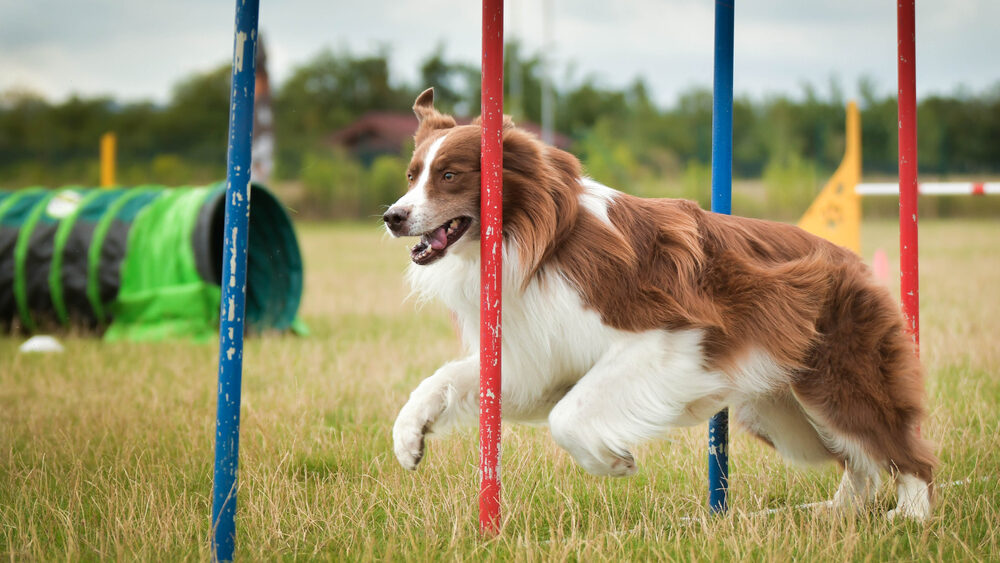
Once you have mastered these basic commands and understand how to communicate effectively with your dog, the sky is the limit. You can move on to more advanced obedience training or even agility courses. But remember, keeping things fun for you and your pup is essential. Be sure to reward them with plenty of treats (and lots of love) when they obey your commands.

