
Table of Contents
Why is it important to maintain a routine with your dog?
It is important to maintain a routine with your dog for several reasons. First and foremost, dogs thrive on predictability and structure. Having a consistent daily training routine helps your dog understand what is expected of them and allows them to feel secure and confident in their environment.
Maintaining a routine can also help with behavioral issues. Dogs are creatures of habit and when they know what to expect, they are less likely to act out or exhibit undesirable behaviors. A predictable schedule also provides opportunities for positive reinforcement and rewards, which can further reinforce good behavior.
Following a routine also helps with consistency in training. Dogs learn through repetition and by sticking to a daily training routine, you are providing them with consistent guidance and reinforcement of desired behaviors. This leads to faster and more effective learning for your dog.
Create a daily training routine for your dog?
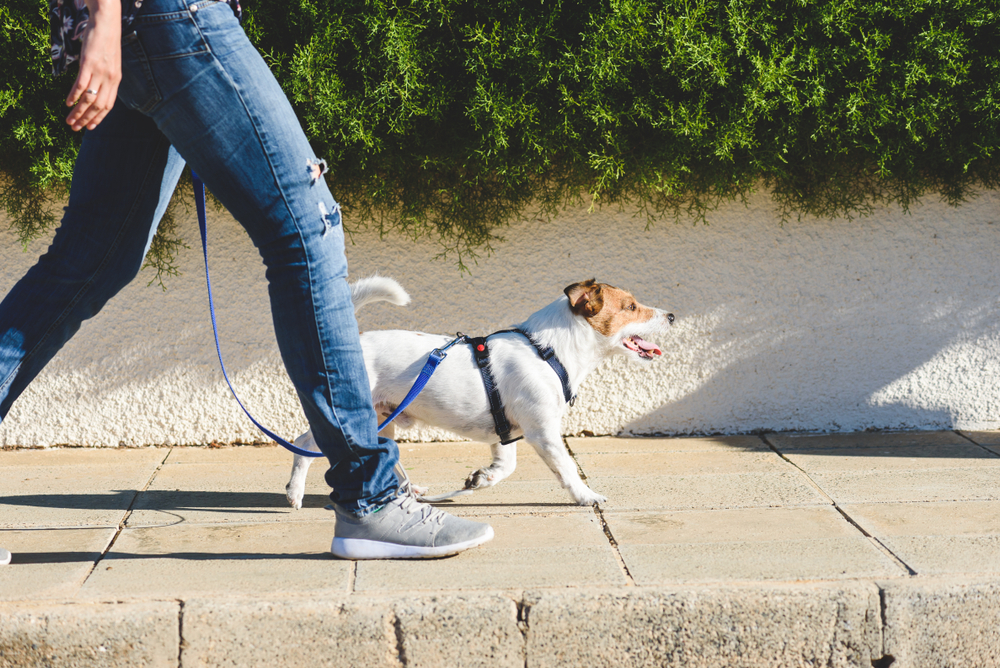
Establishing a set time each day for walking and training sessions is key. This could be first thing in the morning before work or in the evening after dinner.
I recommend that anyone working away from home, especially during a typical 9-5 day, take the time to prioritize meeting their dog’s physical exercise needs before leaving them for the day. Engaging in a good walk and play session in the morning can significantly enhance your dog’s mood and well-being while you’re away.
This not only helps to burn off excess energy, reducing the likelihood of destructive behavior, but also strengthens the bond between you and your dog. A well-exercised dog is typically calmer and more content, making your return home more enjoyable for both of you. So, consider dedicating some time each morning to ensure your dog gets the exercise they need!

Schedule Ideas :
Here is the guide I use as a starting point for all dogs and their owners. It’s important to remember that every dog and every person is unique, which means that each dog might require different approaches based on their individual needs.
Factors such as breed specifics, age, temperament, and long-term goals can significantly influence what is necessary for optimal training and care. This guide serves as a flexible framework, allowing for adjustments and personalized strategies to ensure each dog thrives in their environment while fostering a strong bond with their owner. Keep in mind that dogs need 30 minutes to 2 hours of exercise per day.
Morning:
Active Training:
- 20-45 minute structured walks: Practice different walks, such as Loose Leash, “Heel” and Sniff breaks.
- 5-15 minutes of high energy play: Use dogs favorite playing games, such as tug, fetch, running, sniffing for food, etc.
Passive training:
- 5-60 mins of Impulse Control and Self Soothing exercises: Add Duration, Distance and Distractions to Basic Commands (recall/sit/down/place) and Containment time while you do chores, eat or have guest over.
Mid Day:
Passive Training:
- Containment Exercise: Multiple hours of crate, place and tiebacks while you do every things such as cooking, vacuuming, going in and out the house.
- Mental enrichment: breaks for your dog self soothe and burn of any mental energy. Use Kong toys, sniff games, chew treat, etc.
- Potty breaks/Daily needs: use to work on impulse control via crate/place release agreements, appropriate state of mind while following through the house, waiting for release at thresholds (example: outside door)
Evening:
Active Training:
- 20-45 minute structured walks: Practice different walks, such as Loose Leash, “Heel” and Sniff breaks.
- 5-15 minutes of high energy play: Use dogs favorite playing games, such as tug, fetch, running, sniffing for food, etc.
Passive training:
- 5-60 mins of Impulse Control and Self Soothing exercises: Add Duration, Distance and Distractions to Basic Commands (recall/sit/down/place) and Containment time while you do chores, eat or have guest over or cuddle with your dog
Conclusion:
By following a daily training routine, you are not only ensuring the physical and mental well-being of your dog but also strengthening the bond between you both. Remember to be patient and flexible in your approach as every dog is unique and may require different strategies. With consistency and positive reinforcement, you can create a happy, fulfilled and well-behaved dog through a structured daily routine.